Various
The Baffler: Hirelings
The Baffler: Hirelings
Couldn't load pickup availability
PUBLISHED BY The Baffler
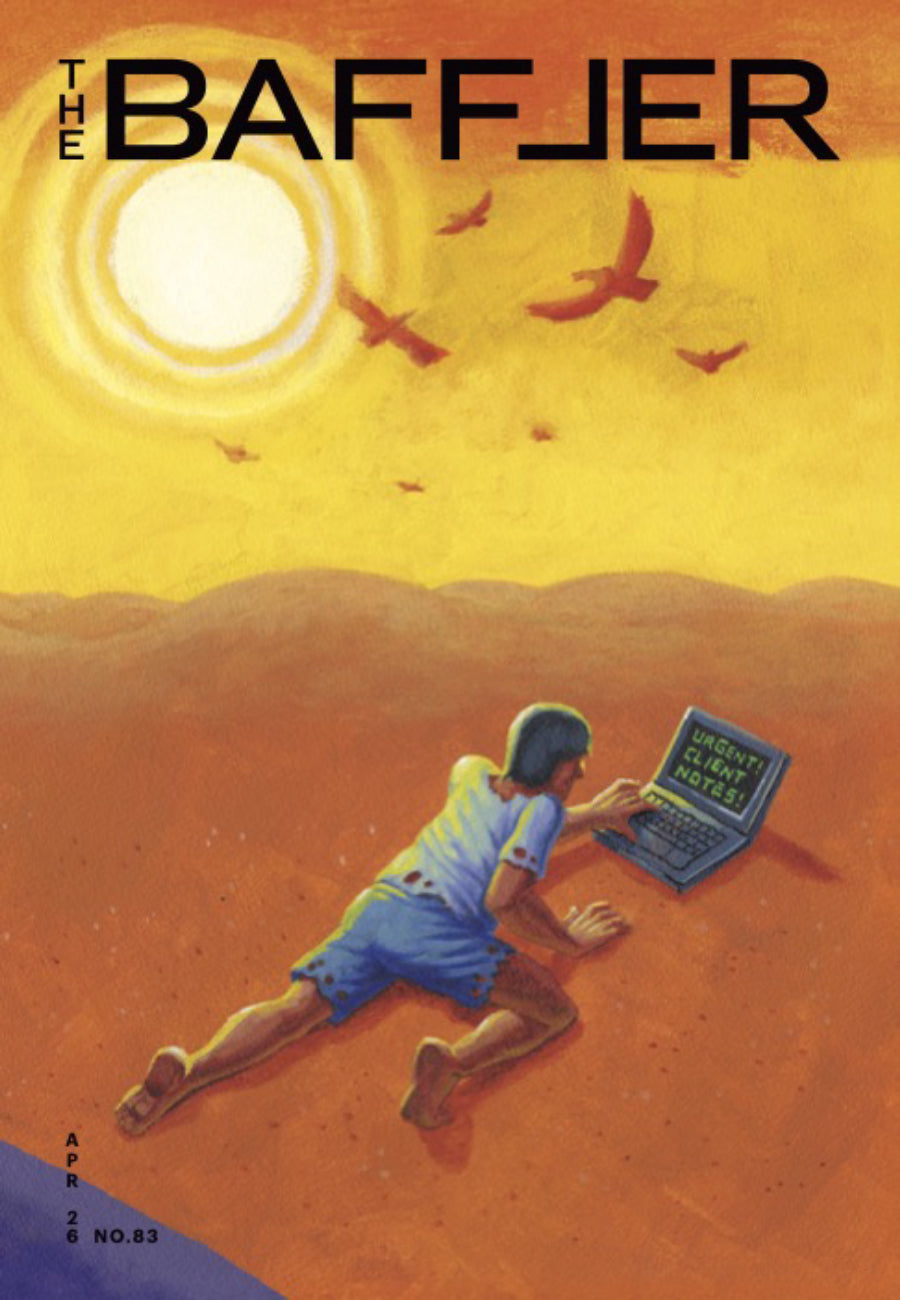
Finding yourself sliding down the lower leg of the K-shaped economy? You’re not alone in facing the downturn: sunny prospects are saved for those with assets to inflate and the dwindling number of flesh-and-blood employees of the Magnificent Seven. Those tech companies’ AI circle jerk has skyrocketed the fortunes of a select few while turning white- collar industries into charnel houses, with email job after email job vibe-coded into the grave. The gigification of American life means that you’re never truly without employment opportunities: sell yourself as a solopreneur gun-for-hire and you too can join the freelancer majority that some predict will dominate more than half the American workforce by 2027. You could also take up actual arms, given the booming racket in private military compa- nies, which has grown in tandem with global conflicts increasingly fought between PMCs in combination with—and, sometimes, instead of—state armies. In “Hirelings,” an issue dedicated to the mercenary and the free- lancer, Benjamin Fogel writes on how South Africa’s Executive Outcomes pioneered selling warfare in a box in the 1990s, the company’s soldiers of fortune defining the modern military hireling as we know it all too well today. Lily Lynch considers the long-lasting aftermath of another armed innovation from the same period: the Bosnian War attracted a motley array of jihadis, Cossacks, and white nation- alists interested in an alternative to the armed intervention of NATO and the Atlanticists. (Elsewhere in turn-of-the-century reminiscing, Henry Rees-Sheridan takes the reader from a Welsh instrumental rendition of a Red Hot Chili Peppers classic through a political history of Cymru before considering the country’s politically groundbreaking present.) No one has yet set a Call of Duty or Battlefield campaign in Yugoslavia, developers preferring to stick to the tried-and-true chauvinisms of American troops on the ground—unless, as Corey Pein writes, Mohammed bin Salman says otherwise, the Saudi prince having made another foray into sportswashing his kingdom by flooding the video game industry with cash.